Europe: Warning (Vienna A)
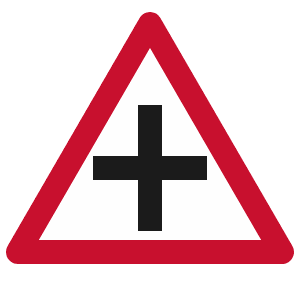
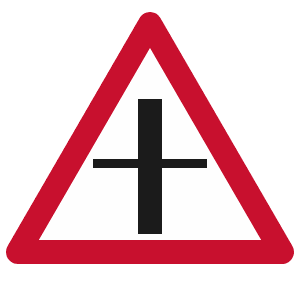
A junction where roads cross is coming up.
Do: Slow down and look for traffic joining from either side.
Red-bordered triangle in Vienna countries; yellow diamond in the US.
Europe: Warning (Vienna A)
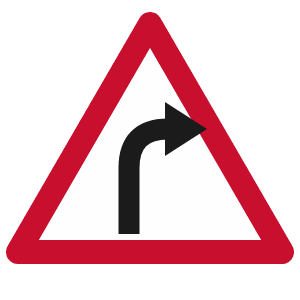
Bend to the right
The road curves to the right ahead.
Do: Reduce speed before the bend, not in it.
Double bends and left bends use the same style.
Europe: Warning (Vienna A)
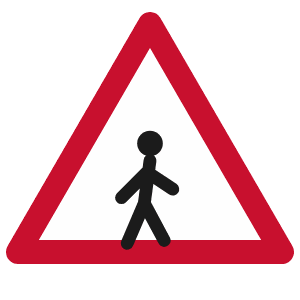
People may be crossing the road, often at a crossing with no lights.
Do: Slow down and be ready to stop.
In the UK this triangle warns of a pedestrian crossing.
Europe: Warning (Vienna A)
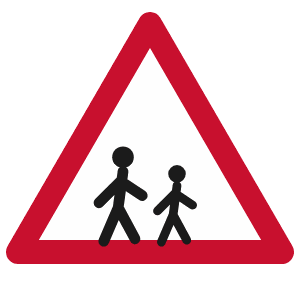
A school, playground or play area is nearby.
Do: Slow down and expect children to step out.
Often paired with flashing amber lights at school times.
Europe: Warning (Vienna A)
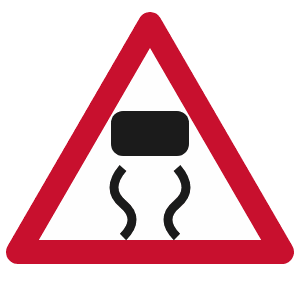
The surface may be slippery, especially when wet or icy.
Do: Slow down; brake and steer gently.
Europe: Warning (Vienna A)
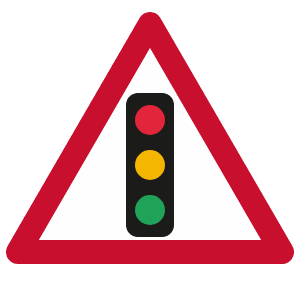
Traffic signals ahead
Traffic lights ahead that you may not see in time.
Do: Be ready to stop.
Europe: Warning (Vienna A)
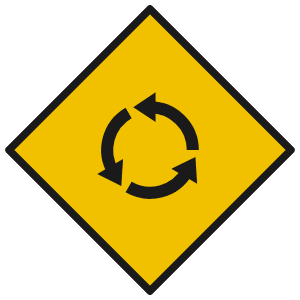
A roundabout is coming up.
Do: Slow down, choose your lane early, and give way as signed.
Direction of travel round it depends on which side the country drives on.
Europe: Warning (Vienna A)
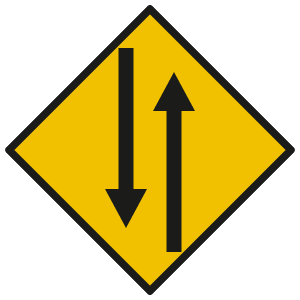
A one-way road or dual carriageway ends and traffic now comes towards you.
Do: Keep to your side of the road.
Drawn in the UK layout (driving on the left).
Europe: Warning (Vienna A)
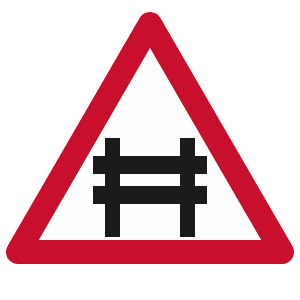
A railway crossing with gates or barriers is ahead.
Do: Slow down and obey the lights and barriers. Never stop on the tracks.
A crossing without a barrier shows a steam train instead.
Europe: Warning (Vienna A)
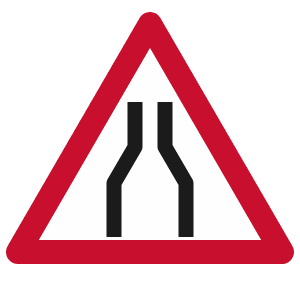
The carriageway gets narrower ahead.
Do: Slow down and let oncoming traffic through if needed.
Europe: Warning (Vienna A)
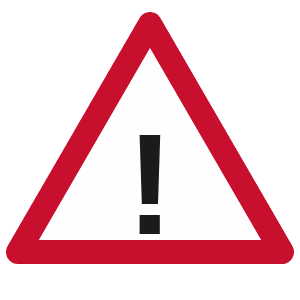
A hazard with no sign of its own. A plate underneath usually says what it is.
Do: Slow down and read the plate.
Europe: Warning (Vienna A)
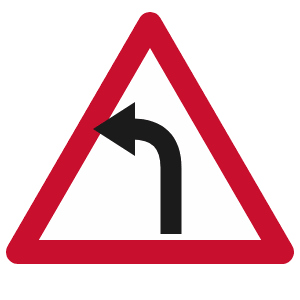
Bend to the left
The road curves to the left ahead.
Do: Slow down before the bend.
Europe: Warning (Vienna A)
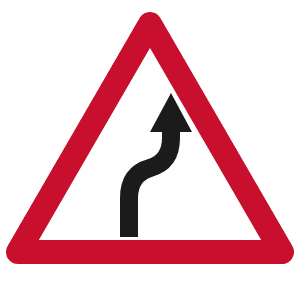
Double bend
Two bends in opposite directions; the first bend is in the direction shown.
Do: Slow down and stay in your lane through both bends.
Europe: Warning (Vienna A)
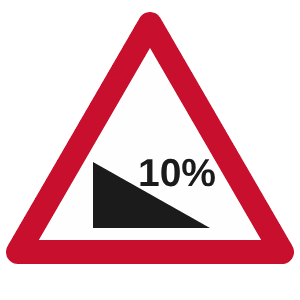
Steep hill downwards
A steep descent; the percentage shows the gradient.
Do: Use a lower gear and avoid riding the brakes.
Some countries show the gradient as a ratio (1:10) instead.
Europe: Warning (Vienna A)
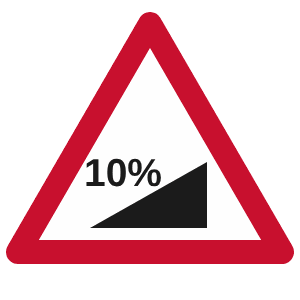
Steep hill upwards
A steep climb ahead.
Do: Change to a lower gear in good time; leave space for slow vehicles.
Europe: Warning (Vienna A)
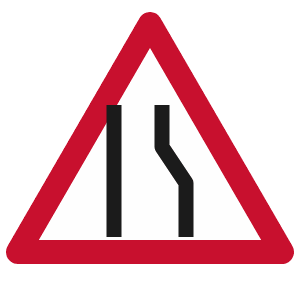
Road narrows on the right
The carriageway gets narrower on the right-hand side.
Do: Slow down and merge or give way as needed.
The mirror image means it narrows on the left.
Europe: Warning (Vienna A)
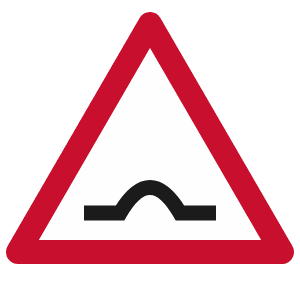
Uneven road / bump
A bumpy or uneven surface ahead.
Do: Slow down to keep control.
Europe: Warning (Vienna A)
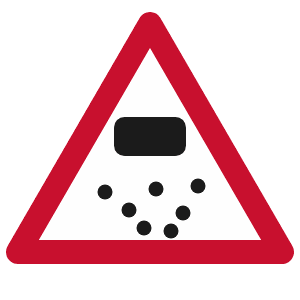
Loose chippings
Loose stones on the road can be thrown up by tyres.
Do: Slow down and keep your distance.
Europe: Warning (Vienna A)
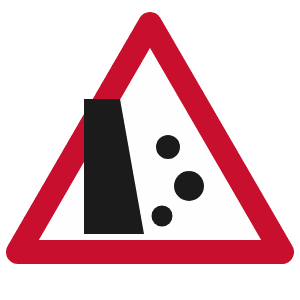
Falling rocks
Rocks may fall or have fallen onto the road.
Do: Drive carefully and watch for debris.
Europe: Warning (Vienna A)
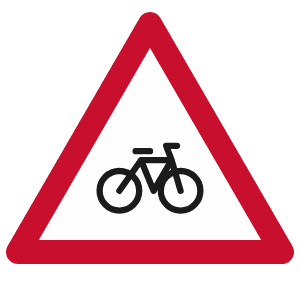
Cyclists
Cyclists are likely to be on or crossing the road.
Do: Give cyclists plenty of room when passing.
Europe: Warning (Vienna A)
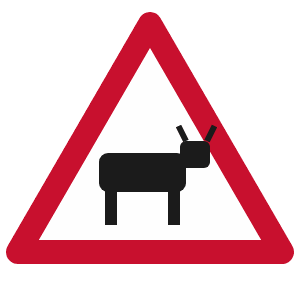
Cattle or farm animals
Farm animals may be on the road.
Do: Slow down and be ready to stop.
Europe: Warning (Vienna A)
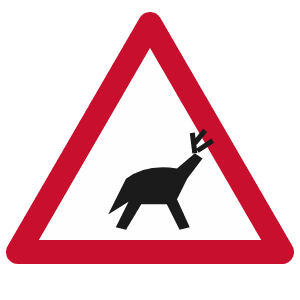
Wild animals
Deer or other wild animals may cross, especially at dawn and dusk.
Do: Slow down. If an animal appears, brake firmly in a straight line rather than swerving.
Europe: Warning (Vienna A)
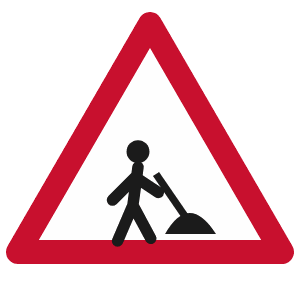
Roadworks
Road works ahead; workers and machinery may be present.
Do: Slow down, obey temporary signs and speed limits.
Europe: Warning (Vienna A)
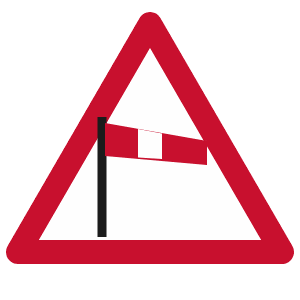
Crosswind
Strong side winds, often on bridges or open roads.
Do: Hold the steering firmly; take care when passing high-sided vehicles.
Europe: Warning (Vienna A)
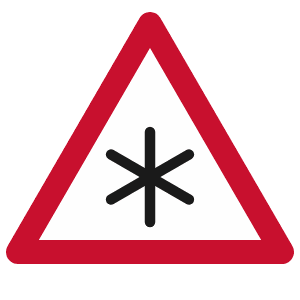
Risk of ice or snow
The road may be icy or snowy.
Do: Drive slowly; brake and steer very gently.
Europe: Warning (Vienna A)
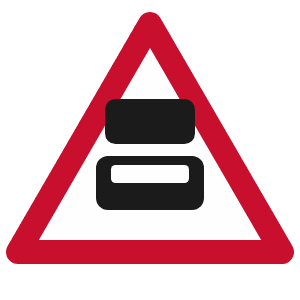
Queues likely
Traffic is likely to be queuing ahead.
Do: Slow down and be ready to stop.
Europe: Warning (Vienna A)
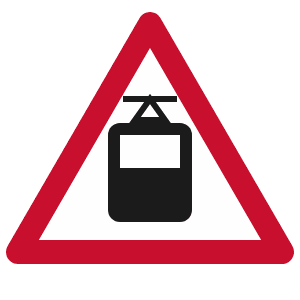
Tram crossing
Trams cross or run along the road ahead.
Do: Look both ways; trams cannot steer around you.
Europe: Warning (Vienna A)
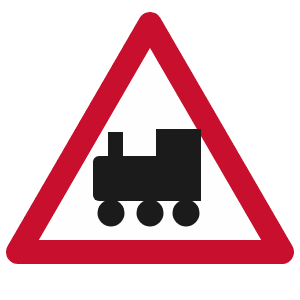
A railway crossing with no gates or barriers.
Do: Look and listen both ways; obey any lights.
Europe: Warning (Vienna A)
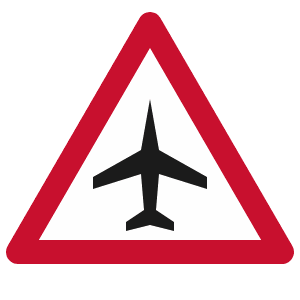
Low-flying aircraft
Aircraft fly low near an airfield; sudden noise.
Do: Don’t be startled; keep control.
Europe: Warning (Vienna A)
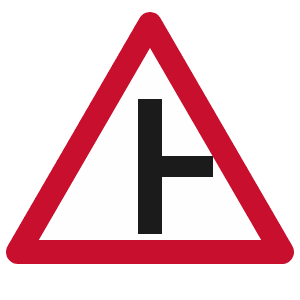
Side road junction
A side road joins from the side shown.
Do: Watch for vehicles pulling out.
Europe: Warning (Vienna A)
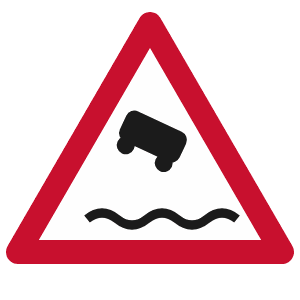
Quayside or river bank
The road leads to a quay or river bank with water at the end.
Do: Slow down, especially at night or in fog.
Europe: Warning (Vienna A)
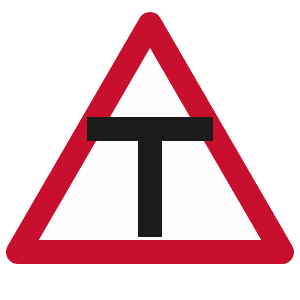
The road ahead ends at a T-junction; you must turn left or right.
Do: Slow down and get ready to stop or give way.
The thicker bar shows the road with priority.
Europe: Warning (Vienna A)
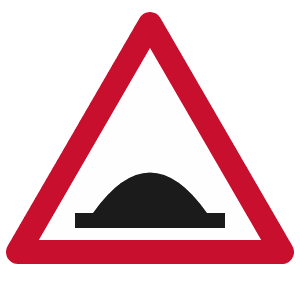
A humpback bridge ahead; the road rises steeply and your view over it is limited.
Do: Slow down; low vehicles may ground.
UK warning sign.
Europe: Warning (Vienna A)
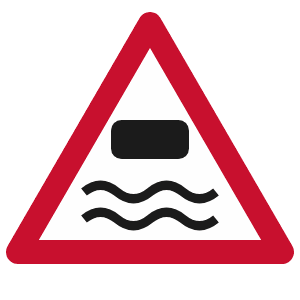
Water flows across the road ahead.
Do: Check the depth gauge, drive slowly in first gear, then test your brakes.
Usually paired with a FORD plate and a depth gauge.
Europe: Warning (Vienna A)
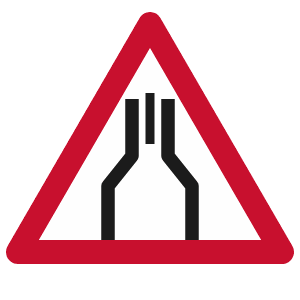
The dual carriageway ends and traffic in both directions shares one road.
Do: Stop overtaking and keep to your side.
Europe: Priority (Vienna B)

A junction where you must stop.
Do: Stop completely at the line, give way, and go only when it’s safe.
Red octagon almost everywhere; Japan uses a red inverted triangle.
Europe: Priority (Vienna B)
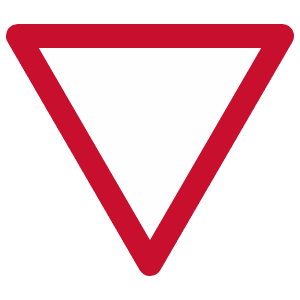
Traffic on the road you’re joining has priority.
Do: Slow down, and stop only if you need to.
The UK version says GIVE WAY and the US version says YIELD. Many countries leave it blank.
Europe: Priority (Vienna B)
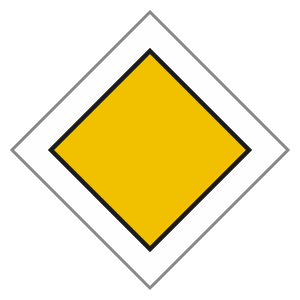
You’re on a priority road: traffic at the junctions ahead must give way to you.
Do: Carry on, but stay alert.
Common in continental Europe; not used in the UK or US.
Europe: Priority (Vienna B)
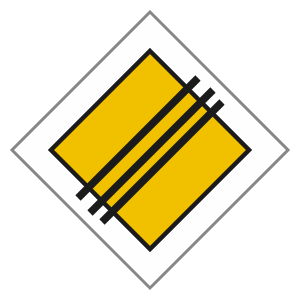
End of priority road
Your priority ends here and normal junction rules apply again.
Do: Check which side has priority at each junction.
Continental Europe.
Europe: Priority (Vienna B)
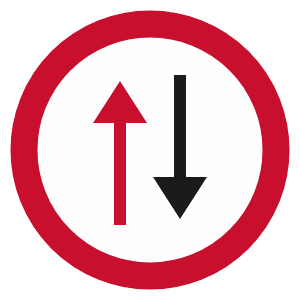
Give way to oncoming traffic
A narrow section: oncoming vehicles go first.
Do: Wait for oncoming traffic to clear before entering.
The red arrow shows your direction, which does not have priority.
Europe: Priority (Vienna B)
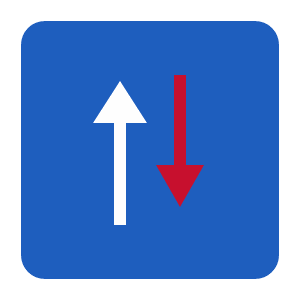
Priority over oncoming traffic
A narrow section where you go first.
Do: Proceed with care; oncoming drivers should wait.
Blue rectangle with a white arrow (yours) and a red arrow (theirs).
Europe: Priority (Vienna B)
Priority at the next junction
At the next junction only, you have priority over side roads.
Do: Proceed with care; normal rules apply after it.
Common in Germany, Austria and Scandinavia.
Europe: Prohibition (Vienna C)
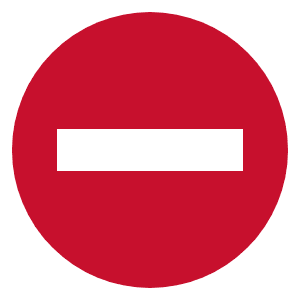
Vehicles may not enter, usually because it’s the exit of a one-way street.
Do: Don’t drive in. Find another route.
The US version adds the words DO NOT ENTER.
Europe: Prohibition (Vienna C)
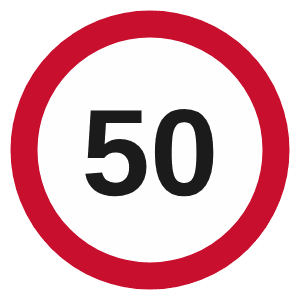
You must not go faster than the number shown.
Do: Keep to it. It’s a limit, not a target.
In mph in the UK and US, km/h almost everywhere else.
Europe: Prohibition (Vienna C)
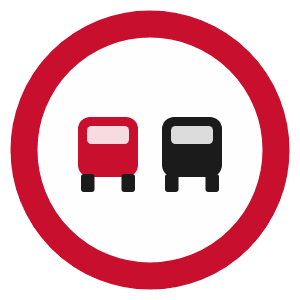
Overtaking motor vehicles is not allowed.
Do: Stay behind the vehicle in front until the restriction ends.
Europe: Prohibition (Vienna C)
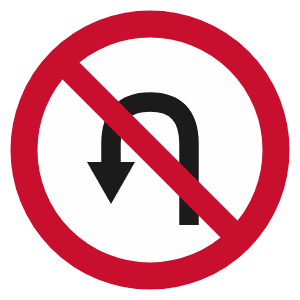
You may not turn round to go back the way you came.
Do: Continue and find a legal place to turn.
Europe: Prohibition (Vienna C)
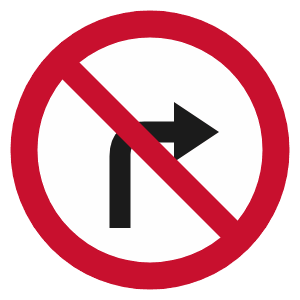
No right turn
Turning right is prohibited at this junction.
Do: Go straight on or left, and find another route.
"No left turn" is the mirror image.
Europe: Prohibition (Vienna C)

No vehicles
No vehicles are allowed beyond this point.
Do: Don’t enter. In the UK, you may push a bicycle through.
Europe: Prohibition (Vienna C)
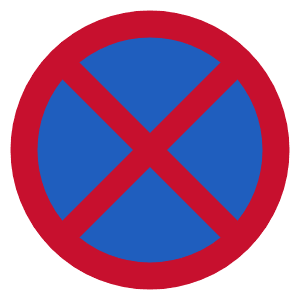
You must not stop on the carriageway, not even to pick someone up.
Do: Keep moving.
Vienna countries; the UK uses it for clearways.
Europe: Prohibition (Vienna C)
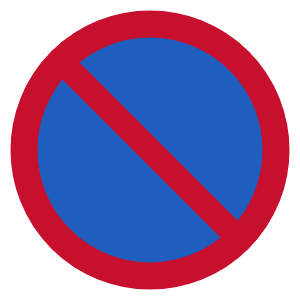
You must not park or wait here. Plates may give times.
Do: Find permitted parking.
Europe: Prohibition (Vienna C)
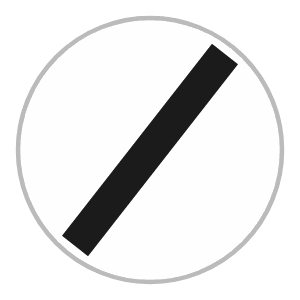
Previous restrictions end. In the UK, this is the national speed limit sign.
Do: Apply the default limit for the road and vehicle type.
UK: 60 mph on single carriageways and 70 mph on dual carriageways and motorways, for cars.
Europe: Prohibition (Vienna C)
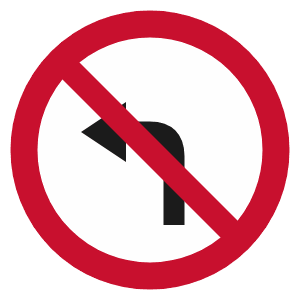
No left turn
Turning left is prohibited at this junction.
Do: Go straight on or right, and find another route.
Europe: Prohibition (Vienna C)
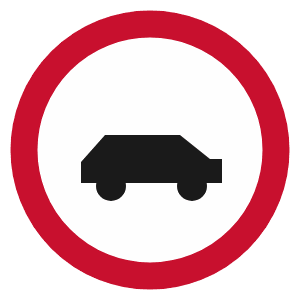
No motor vehicles
Cars and other motor vehicles are not allowed.
Do: Find another route.
Europe: Prohibition (Vienna C)
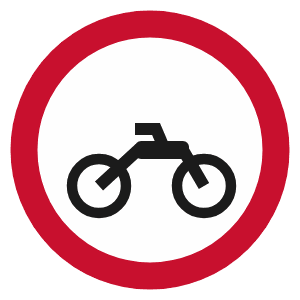
No motorcycles
Motorcycles are not allowed.
Do: Riders must use another route.
Europe: Prohibition (Vienna C)
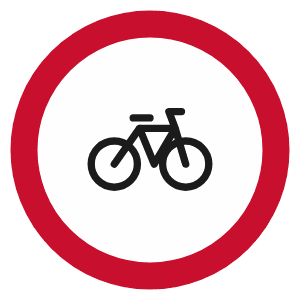
No cycling
Bicycles are not allowed.
Do: Dismount and push, or use another route.
Europe: Prohibition (Vienna C)
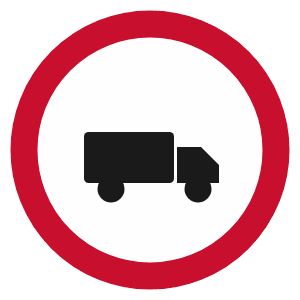
No lorries / goods vehicles
Goods vehicles over the weight shown on a plate may not enter.
Do: Lorry drivers must find another route.
Europe: Prohibition (Vienna C)
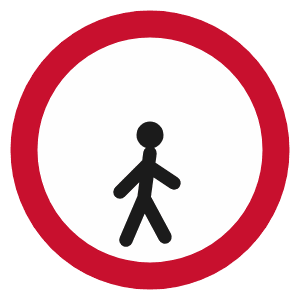
No pedestrians
Pedestrians may not walk here.
Do: Use the footpath or crossing provided.
Europe: Prohibition (Vienna C)
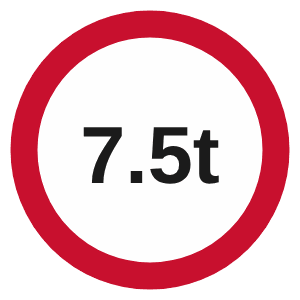
Weight limit
Vehicles heavier than the weight shown may not pass.
Do: Check your vehicle’s gross weight.
Common on old bridges.
Europe: Prohibition (Vienna C)
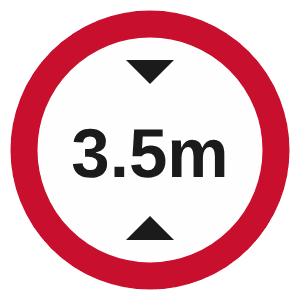
Height limit
Vehicles taller than the height shown cannot pass, often a bridge or tunnel.
Do: Know your vehicle height, including roof loads.
The UK often shows feet and inches as well as metres.
Europe: Prohibition (Vienna C)
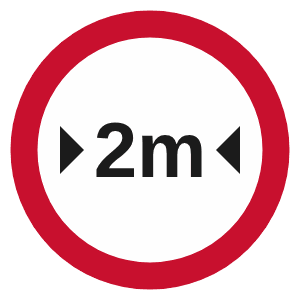
Width limit
Vehicles wider than the width shown may not pass.
Do: Check your vehicle width, including mirrors.
Europe: Prohibition (Vienna C)
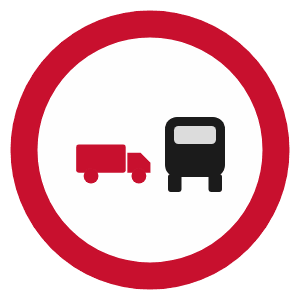
No overtaking by lorries
Goods vehicles must not overtake other vehicles.
Do: Lorry drivers stay in lane until the restriction ends.
Europe: Prohibition (Vienna C)
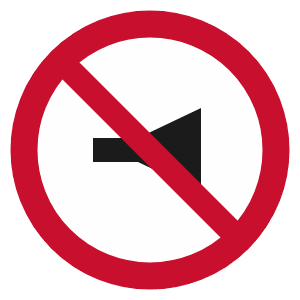
No sounding of horns
Using your horn is not allowed, except in an emergency.
Do: Don’t use the horn.
Europe: Prohibition (Vienna C)
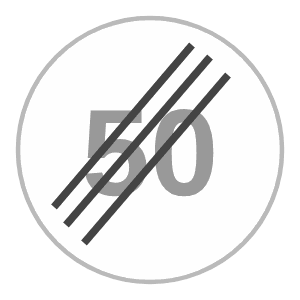
End of speed limit
The speed limit shown no longer applies; the general limit for the road takes over.
Do: Apply the national or default limit.
Europe: Prohibition (Vienna C)
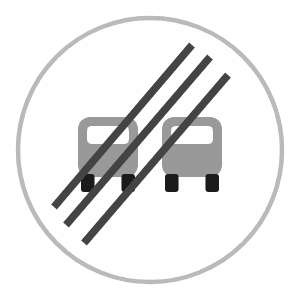
End of no overtaking
Overtaking is allowed again when safe.
Do: Overtake only where safe and legal.
Europe: Prohibition (Vienna C)
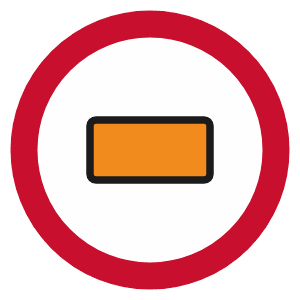
No dangerous goods
Vehicles carrying dangerous goods (marked with orange plates) are not allowed.
Do: Hazardous-goods drivers must use another route.
Often placed before tunnels.
Europe: Mandatory (Vienna D)
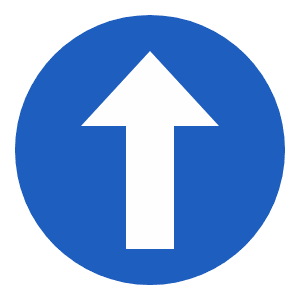
You must go straight on.
Do: Don’t turn at this junction.
Blue circles give orders: you must do what they show.
Europe: Mandatory (Vienna D)
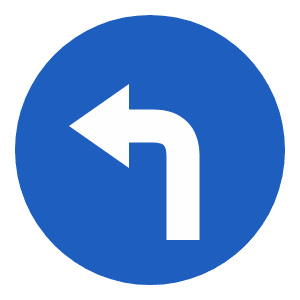
Turn left
You must turn left.
Do: Get into the left lane early and signal.
"Turn right" is the mirror image.
Europe: Mandatory (Vienna D)

Pass on the left side of the obstruction or island.
Do: Stay to the left of the bollard or island.
Europe: Mandatory (Vienna D)
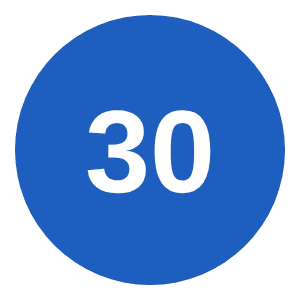
Minimum speed
You must not drive slower than the speed shown (unless it’s unsafe).
Do: Keep up to at least this speed.
Europe: Mandatory (Vienna D)
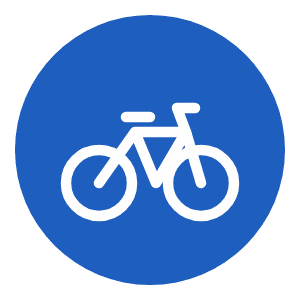
Cycles only
This route is for pedal cycles only.
Do: Cars must not enter.
Paired with a pedestrian symbol for shared paths.
Europe: Mandatory (Vienna D)
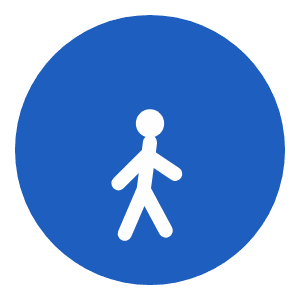
Pedestrians only
A route for people on foot.
Do: Don’t drive or ride on it.
Europe: Mandatory (Vienna D)
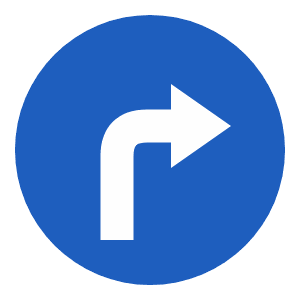
Turn right
You must turn right.
Do: Get into the right lane early and signal.
Europe: Mandatory (Vienna D)
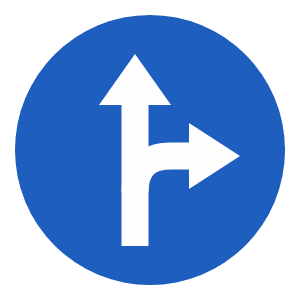
Ahead or right only
You may go straight on or turn right, but not left.
Do: Choose one of the directions shown.
Other versions show ahead or left.
Europe: Mandatory (Vienna D)
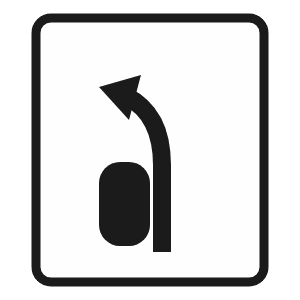
Keep right
Pass to the right of the island or obstruction.
Do: Stay to the right of the bollard or island.
Standard in right-driving countries.
Europe: Mandatory (Vienna D)
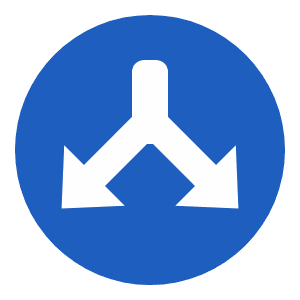
Pass either side
You may pass the obstruction on either side.
Do: Choose the side that is clear and safe.
Europe: Mandatory (Vienna D)
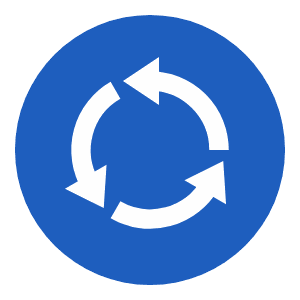
You must go round in the direction of the arrows.
Do: Give way as signed and follow the direction of circulation.
Arrows run anticlockwise in right-driving countries and clockwise in the UK and Ireland.
Europe: Mandatory (Vienna D)

Snow chains required
Snow chains must be fitted to at least two drive wheels.
Do: Fit chains before continuing.
Common in Alpine countries in winter.
Europe: Mandatory (Vienna D)
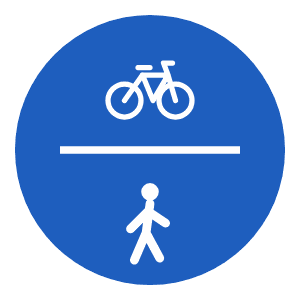
Shared path: cycles and pedestrians
A path shared by cyclists and pedestrians.
Do: Cyclists give way to pedestrians and ride slowly.
A vertical line between the symbols means separate lanes.
Europe: Mandatory (Vienna D)
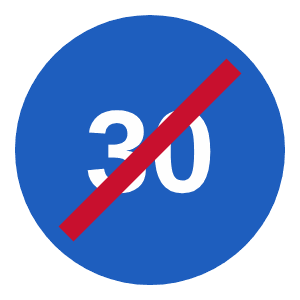
End of minimum speed
The minimum speed requirement ends.
Do: Drive at a speed that suits the conditions.
Europe: Mandatory (Vienna D)
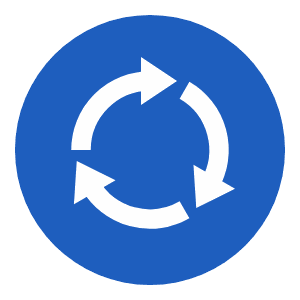
A mini-roundabout: give way to traffic from your right and go round clockwise.
Do: Go round the painted circle; large vehicles may drive over it.
UK and Ireland arrows run clockwise.
Europe: Information (Vienna E–G)
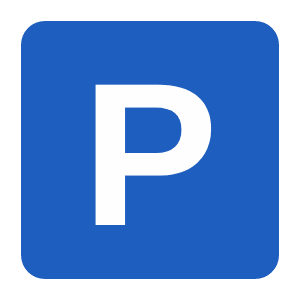
Parking
A place where parking is allowed. A plate may show times or charges.
Do: Park within the bays and follow any time limits.
Europe: Information (Vienna E–G)
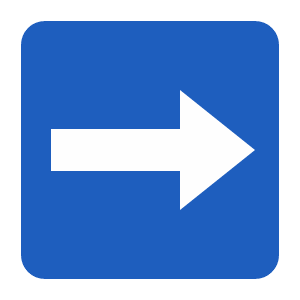
Traffic may only travel in the direction of the arrow.
Do: Don’t drive against the arrow.
Europe: Information (Vienna E–G)
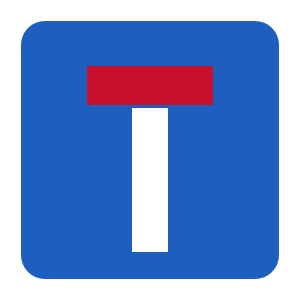
The road is a dead end.
Do: Expect to turn round at the end.
Europe: Information (Vienna E–G)
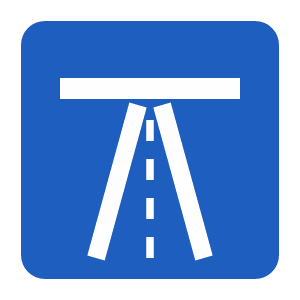
Motorway rules start here.
Do: No learners (except in the UK with an approved instructor), pedestrians, cyclists or slow vehicles. Faster speeds and lane discipline apply.
Blue in the UK and most of Europe; green in some countries, such as Switzerland and Italy.
Europe: Information (Vienna E–G)
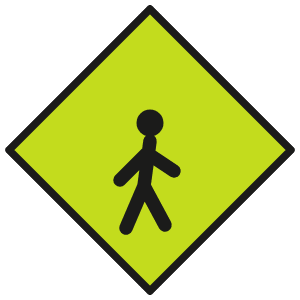
Pedestrian crossing
A marked crossing point is here.
Do: Give way to anyone on the crossing.
Common in Europe; UK zebra crossings use flashing amber beacons instead.
Europe: Information (Vienna E–G)

Hospital
A hospital is ahead.
Do: Drive quietly and watch for ambulances.
Europe: Information (Vienna E–G)
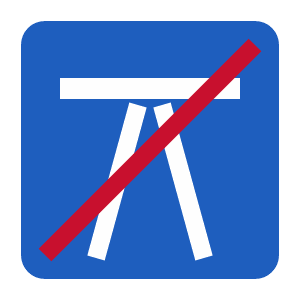
Motorway rules end here.
Do: Expect lower limits, junctions and slower road users.
Europe: Information (Vienna E–G)
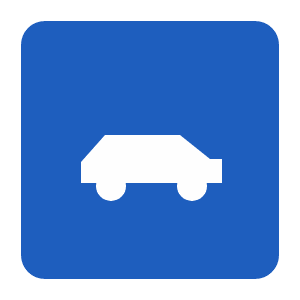
Expressway / motor road
A road reserved for motor vehicles; walking, cycling and slow vehicles are banned.
Do: Expect fast traffic, and don’t stop or reverse.
Germany: Kraftfahrstraße. France: route pour automobiles.
Europe: Information (Vienna E–G)

Tunnel
A tunnel begins here, with its own rules.
Do: Switch on dipped headlights, keep your distance and don’t overtake unless allowed.
Europe: Information (Vienna E–G)
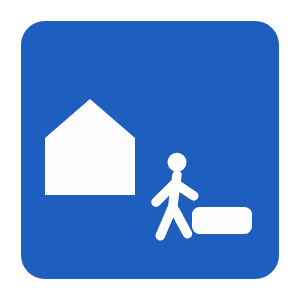
Residential zone / home zone
Pedestrians and children may use the whole street.
Do: Drive at walking pace and give way to pedestrians. Park only in marked spaces.
Germany: verkehrsberuhigter Bereich. Netherlands: woonerf.
Europe: Information (Vienna E–G)
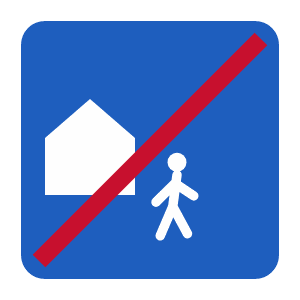
End of residential zone
The home zone ends and normal traffic rules apply.
Do: Resume normal driving with care.
Europe: Information (Vienna E–G)
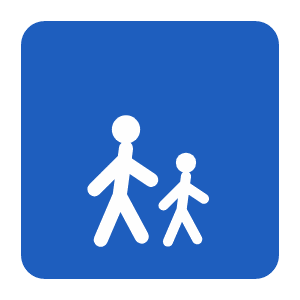
Pedestrian zone
An area for pedestrians only, except for vehicles shown on a plate.
Do: Don’t drive in unless a plate allows you to, for example for deliveries at set times.
Europe: Information (Vienna E–G)
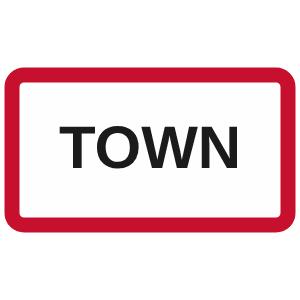
Town or village entry (built-up area)
You are entering a built-up area, where the urban speed limit applies.
Do: Slow to the urban limit (often 50 km/h in Europe).
In France the sign itself sets the 50 km/h limit.
Europe: Information (Vienna E–G)
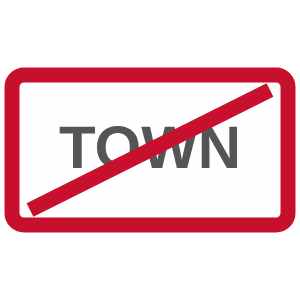
End of built-up area
You are leaving the built-up area.
Do: The general limit for the road type applies again.
Europe: Information (Vienna E–G)
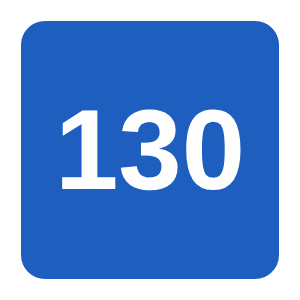
Recommended speed
An advisory (not compulsory) maximum speed.
Do: Use it as guidance, especially on bends and junctions.
Germany's Autobahn shows 130 km/h as the recommended speed.
Europe: Information (Vienna E–G)
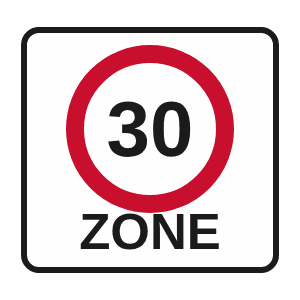
30 km/h zone
A zone where the 30 km/h limit applies on every street until you see the end sign.
Do: Keep to 30 in the whole zone.
Europe: Information (Vienna E–G)
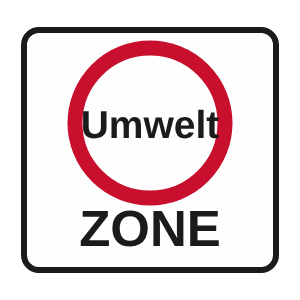
Only vehicles meeting the emission rules (with the right sticker) may enter.
Do: Check the rules and buy a sticker before you drive in.
Germany: Umweltzone. France uses Crit’Air stickers; many cities have similar zones.
Europe: Information (Vienna E–G)
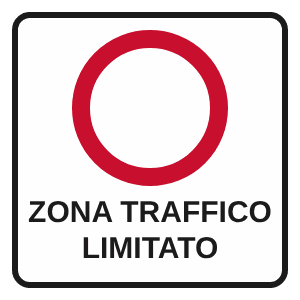
ZTL: only authorised vehicles may enter during the times shown. Cameras enforce it.
Do: Don’t drive in unless your hotel or permit allows it; fines arrive by post.
Italy: Zona a Traffico Limitato.
Europe: Information (Vienna E–G)

Speed cameras or average-speed checks are used on this road.
Do: Check your speed now and keep to the limit.
Designs vary; the UK uses a camera symbol on a white sign.
Europe: Information (Vienna E–G)
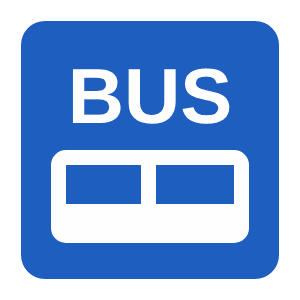
Bus lane
A lane reserved for buses (and sometimes taxis and cycles).
Do: Don’t drive in it during the times shown.
Europe: Information (Vienna E–G)
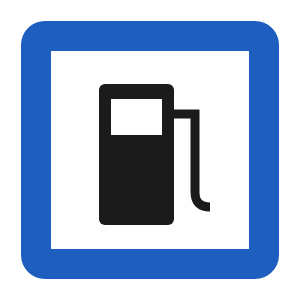
Fuel station
Fuel is available ahead.
Do: Plan your stop.
Europe: Information (Vienna E–G)
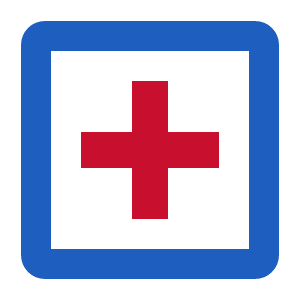
First aid
A first-aid post is available.
Do: Use it in an emergency.
Europe: Information (Vienna E–G)
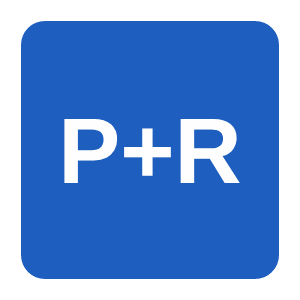
Park and ride
Parking with a public transport connection into town.
Do: Park here and take the bus or train.
Europe: Information (Vienna E–G)
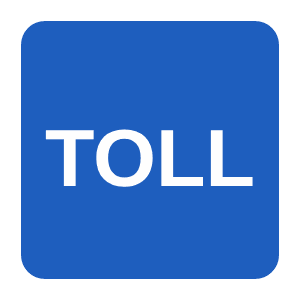
Toll road
A toll must be paid on this road or at the barrier ahead.
Do: Have a card ready or check the electronic toll rules.
France: péage. Italy: pedaggio. Some countries use a vignette instead.
USA: Regulatory (MUTCD)
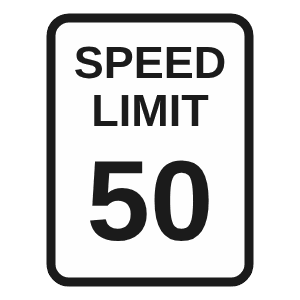
The maximum legal speed in mph.
Do: Keep at or below it.
The US uses white rectangles for regulatory signs instead of red circles.
USA: Regulatory (MUTCD)
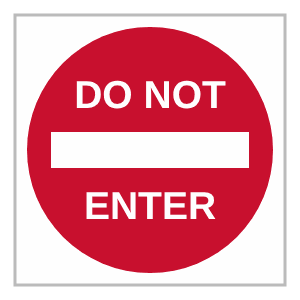
No entry for traffic in your direction.
Do: Don’t enter. You’re probably facing the wrong way on a one-way road.
USA: Regulatory (MUTCD)
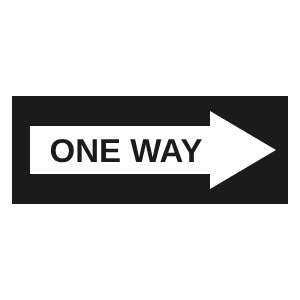
One way
Traffic flows only in the arrow direction.
Do: Turn only in the direction shown.
USA: Regulatory (MUTCD)
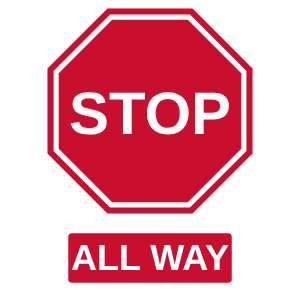
A stop sign with an ALL WAY plate: every approach must stop.
Do: Stop, then take turns in arrival order.
USA: Regulatory (MUTCD)
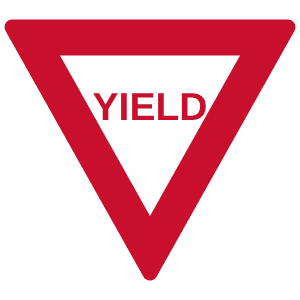
Give way to traffic and pedestrians.
Do: Slow down, and stop if needed.
USA: Regulatory (MUTCD)
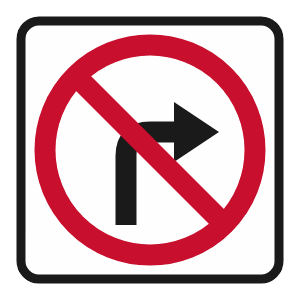
No right turn (USA)
Right turns are prohibited.
Do: Continue straight or turn left where allowed.
US prohibition signs use a red circle and slash on a white square.
USA: Regulatory (MUTCD)
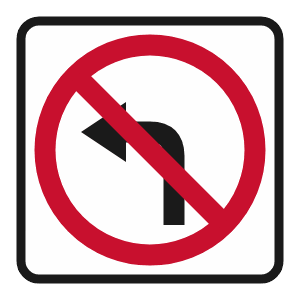
No left turn (USA)
Left turns are prohibited.
Do: Find another route.
USA: Regulatory (MUTCD)
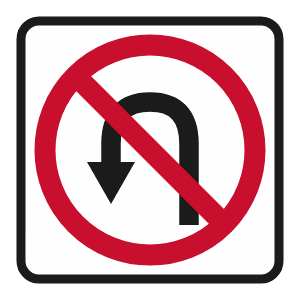
No U-turn (USA)
U-turns are prohibited.
Do: Continue to a place where turning is allowed.
USA: Regulatory (MUTCD)
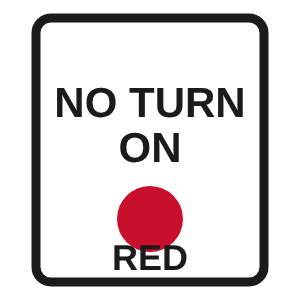
You may not turn on a red light at this intersection.
Do: Wait for the green.
Right on red is otherwise allowed after a full stop in most states.
USA: Regulatory (MUTCD)
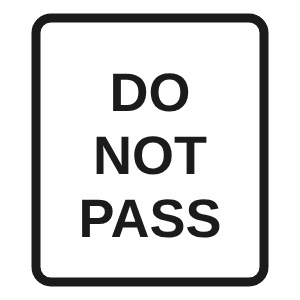
Passing (overtaking) is not allowed.
Do: Stay in your lane.
USA: Regulatory (MUTCD)
Keep right
Keep to the right of the island or obstruction.
Do: Pass on the right.
USA: Regulatory (MUTCD)
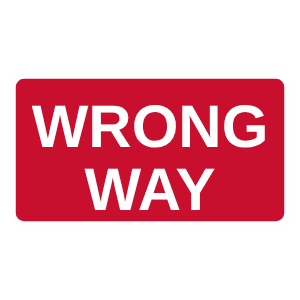
You are going against traffic, usually on an exit ramp.
Do: Stop and turn round safely straight away.
USA: Regulatory (MUTCD)
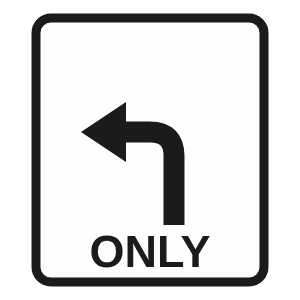
Left turn only
Traffic in this lane must turn left.
Do: Change lanes early if you aren’t turning.
USA: Regulatory (MUTCD)
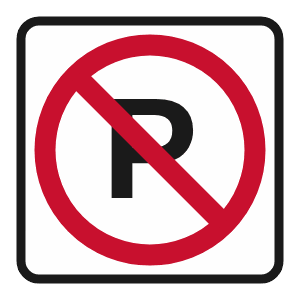
No parking
Parking is prohibited; a plate may give times.
Do: Find legal parking.
USA: Regulatory (MUTCD)
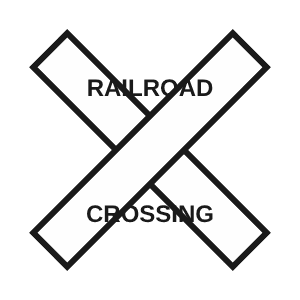
Marks a railroad crossing: treat it like a yield sign.
Do: Slow down, look and listen; stop if a train is coming.
USA: Regulatory (MUTCD)
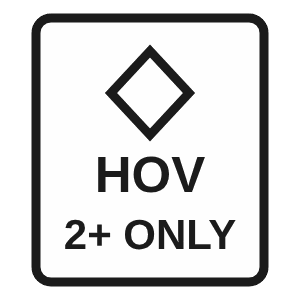
HOV lane
A lane for high-occupancy vehicles (for example two or more people).
Do: Use it only if you meet the occupancy rule shown.
USA: Regulatory (MUTCD)
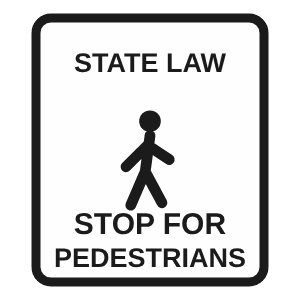
Stop for pedestrians in crosswalk
State law: stop (or yield) for pedestrians in the crosswalk.
Do: Stop and let them cross.
Wording varies by state.
USA: Warning (MUTCD)
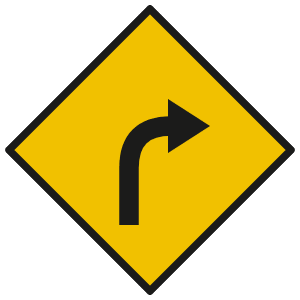
Curve warning
A curve ahead (yellow diamonds are US warning signs).
Do: Slow down before the curve.
The US equivalent of the Vienna red triangle.
USA: Warning (MUTCD)
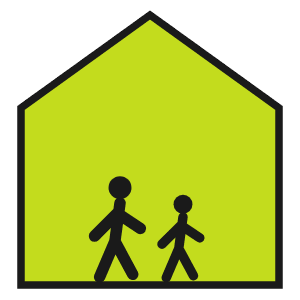
A school zone or crossing.
Do: Slow down, often to a reduced limit at school times.
Fluorescent yellow-green pentagon.
USA: Warning (MUTCD)
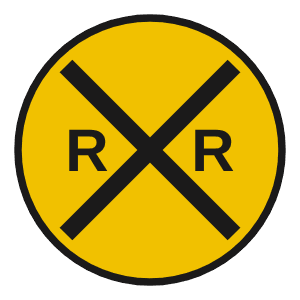
Railroad crossing ahead
Railway tracks cross the road ahead.
Do: Slow down, look and listen. Some vehicles must stop at every crossing.
Round yellow sign, unique to rail crossings.
USA: Warning (MUTCD)
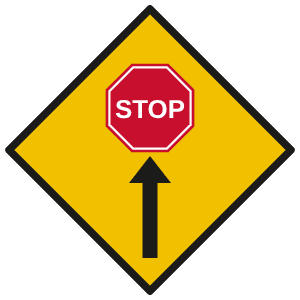
Stop ahead
A stop sign is ahead that may be hard to see.
Do: Slow down and prepare to stop.
USA: Warning (MUTCD)
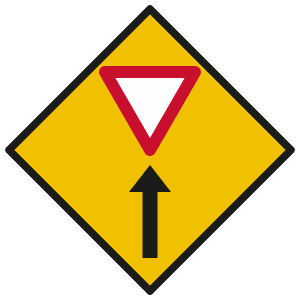
Yield ahead
A yield sign is ahead.
Do: Slow down and get ready to give way.
USA: Warning (MUTCD)
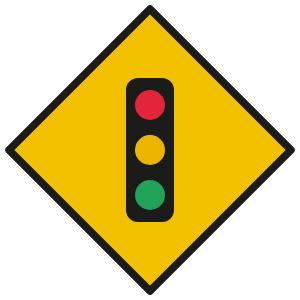
Signal ahead
Traffic lights are ahead.
Do: Be ready to stop.
USA: Warning (MUTCD)
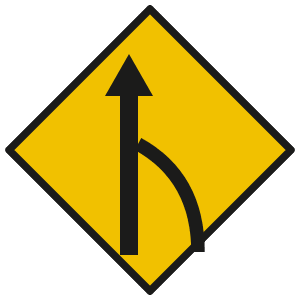
Traffic from another lane will merge.
Do: Adjust speed and leave a gap; merging drivers yield.
USA: Warning (MUTCD)
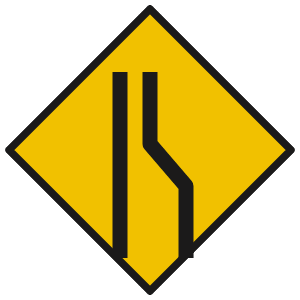
The right lane ends ahead.
Do: Merge left when safe.
USA: Warning (MUTCD)
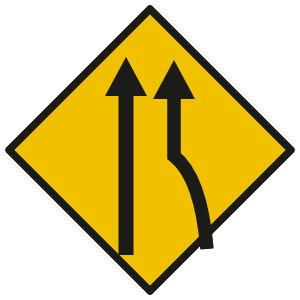
Added lane
A joining road gets its own new lane.
Do: No need to merge, but watch for vehicles changing lanes.
USA: Warning (MUTCD)
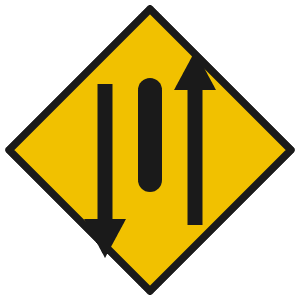
A median will separate the two directions of traffic.
Do: Keep to the right of the median.
USA: Warning (MUTCD)
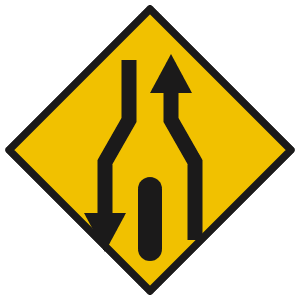
Divided highway ends
The median ends and traffic is two-way ahead.
Do: Keep right and expect oncoming traffic.
USA: Warning (MUTCD)
The road ahead carries traffic in both directions.
Do: Keep right.
USA: Warning (MUTCD)
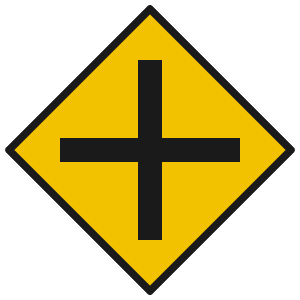
Crossroad
An intersection is ahead.
Do: Watch for cross traffic.
USA: Warning (MUTCD)
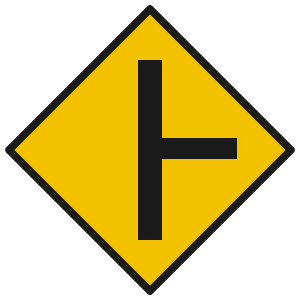
Side road
A side road joins from the side shown.
Do: Watch for vehicles entering.
USA: Warning (MUTCD)
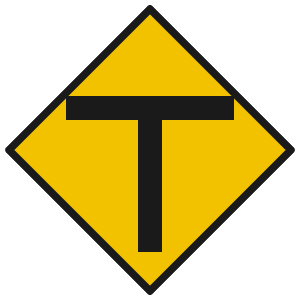
T intersection
The road ends at a T; you must turn left or right.
Do: Slow down and prepare to turn.
USA: Warning (MUTCD)
A roundabout (circular intersection) is ahead.
Do: Slow down, yield to traffic already circulating, and go counterclockwise.
USA: Warning (MUTCD)
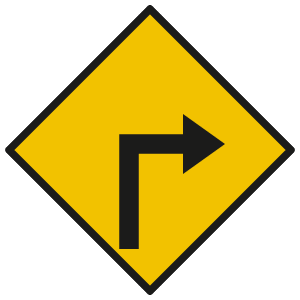
Sharp turn
A sharp turn (about 90°) to the right.
Do: Slow down considerably.
USA: Warning (MUTCD)
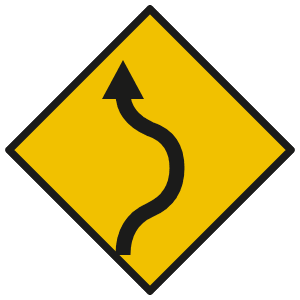
Winding road
A series of three or more curves.
Do: Slow down and stay in your lane.
USA: Warning (MUTCD)
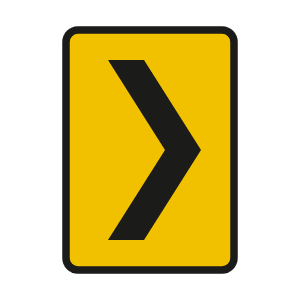
Chevron
Marks the outside of a sharp curve.
Do: Follow the curve in the direction of the chevrons.
USA: Warning (MUTCD)
Bump
A sharp rise in the road surface.
Do: Slow down.
USA: Warning (MUTCD)
Dip
A sudden drop in the road surface.
Do: Slow down; your view ahead may be limited.
USA: Warning (MUTCD)
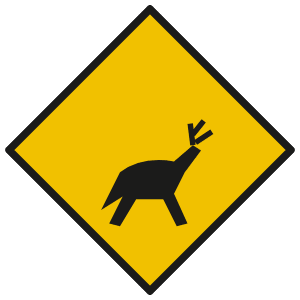
Deer often cross here.
Do: Slow down, especially at dawn and dusk, and use high beams when no one is coming.
USA: Warning (MUTCD)
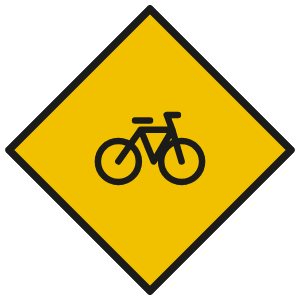
Bicycle crossing
Cyclists may be on or crossing the road.
Do: Give at least 3 feet when passing (the law in many states).
USA: Warning (MUTCD)
Pedestrian crossing
A crosswalk is ahead.
Do: Yield to pedestrians.
Fluorescent yellow-green is used for pedestrian, bicycle and school signs.
USA: Warning (MUTCD)
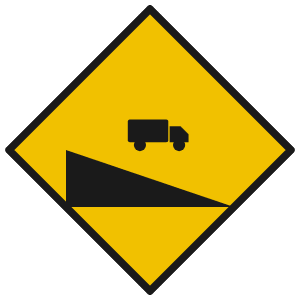
Hill / steep grade
A steep downgrade ahead.
Do: Trucks and heavy vehicles should use a lower gear.
USA: Warning (MUTCD)
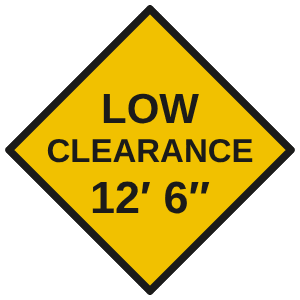
Low clearance
A bridge or structure with limited height clearance.
Do: Check your vehicle height.
USA: Warning (MUTCD)
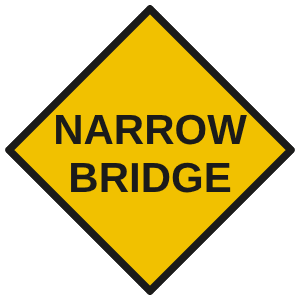
Narrow bridge
The bridge is narrower than the road.
Do: Slow down and watch for oncoming vehicles.
USA: Warning (MUTCD)
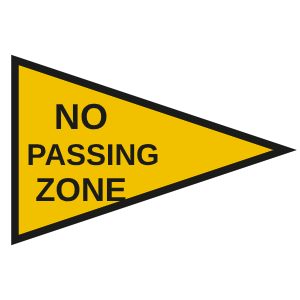
No passing zone (pennant)
Marks the start of a no-passing zone on two-lane roads.
Do: Don’t pass.
Placed on the left side of the road.
USA: Warning (MUTCD)
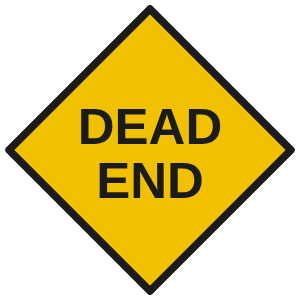
Dead end / No outlet
There is no through route ahead.
Do: Be ready to turn round.
USA: Warning (MUTCD)
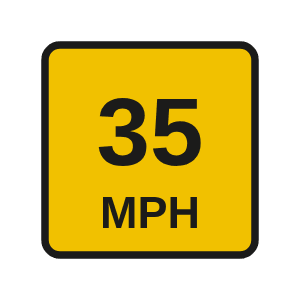
Advisory speed plate
The recommended safe speed for the curve or hazard above it.
Do: Slow to this speed through the hazard.
USA: Warning (MUTCD)
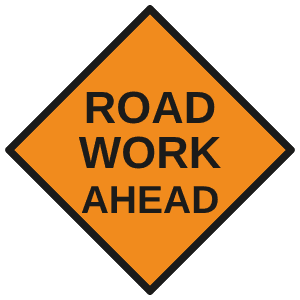
Work zone ahead. Orange means temporary traffic control.
Do: Slow down; fines are often higher in work zones.
USA: Warning (MUTCD)
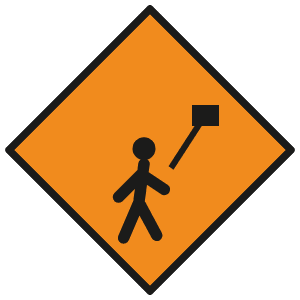
Flagger ahead
A worker with a flag or STOP/SLOW paddle is directing traffic.
Do: Slow down and follow the flagger.
USA: Warning (MUTCD)
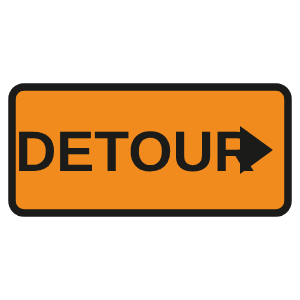
Detour
The route is diverted around a closure.
Do: Follow the detour arrows.
USA: Guide and services (MUTCD)
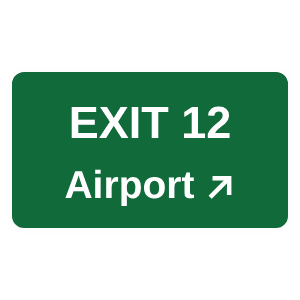
Guide / exit sign
Directions to places, routes or exits.
Do: Read them early and change lanes in good time.
Green for directions; brown for tourist sites; blue for services.
USA: Guide and services (MUTCD)
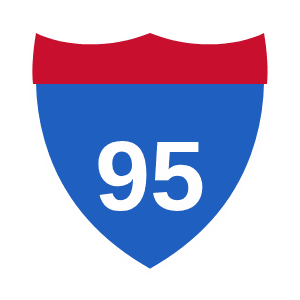
Interstate route shield
Marks an Interstate highway; odd numbers run north–south and even numbers east–west.
Do: Use the number to follow your route.
USA: Guide and services (MUTCD)
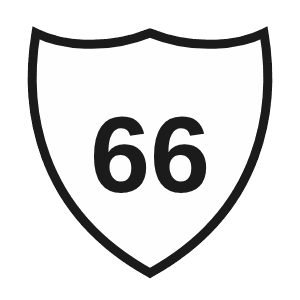
US route shield
Marks a US numbered highway.
Do: Follow the number to stay on your route.
USA: Guide and services (MUTCD)
Services: gas, food, lodging
Driver services are available at the next exit.
Do: Plan your stop.
Blue signs show motorist services.
USA: Guide and services (MUTCD)
Rest area
A rest area with parking and restrooms.
Do: Take a break, which is recommended every two hours.
USA: Guide and services (MUTCD)

Hospital (USA)
A hospital with emergency services is nearby.
Do: Follow the signs in an emergency.
USA: Guide and services (MUTCD)
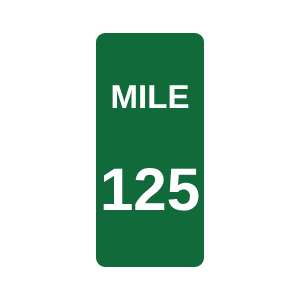
Mile marker
Shows the distance along the highway, useful for locating yourself or reporting an emergency.
Do: Note the number if you need help.
USA: Guide and services (MUTCD)

Recreation (brown)
Recreational or cultural sites, such as parks and campgrounds.
Do: Follow it to the attraction.
No signs match that search. Try a simpler word, such as “turn” or “speed”.